Examining Bet Sizing Sequences Alongside Session Duration Markers to Flag Early Overextension Risks in Layered Virtual Ring Game Formats
Harper Powell · Jul 16, 2026
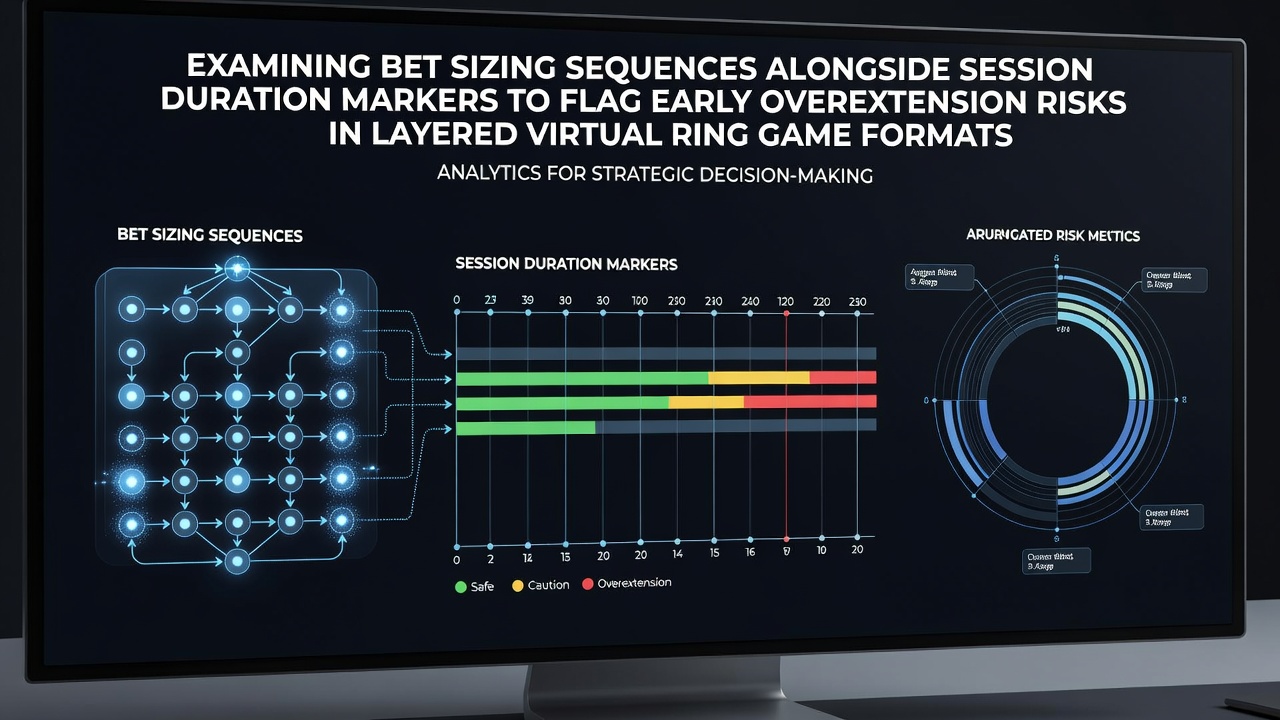
Examining Bet Sizing Sequences Alongside Session Duration Markers to Flag Early Overextension Risks in Layered Virtual Ring Game Formats
Online poker platforms track vast amounts of data during cash game sessions, and analysts examine bet sizing sequences in combination with session duration markers to identify early signs of overextension. These markers include changes in average bet sizes relative to stack depth, frequency of continuation bets, and the timing of aggressive actions as play extends beyond certain thresholds. Data from multi-table environments shows that bet sizes often increase incrementally after 90 minutes of continuous play, while session length correlates with shifts in decision patterns across layered ring game formats.
Bet Sizing Trends Across Extended Sessions
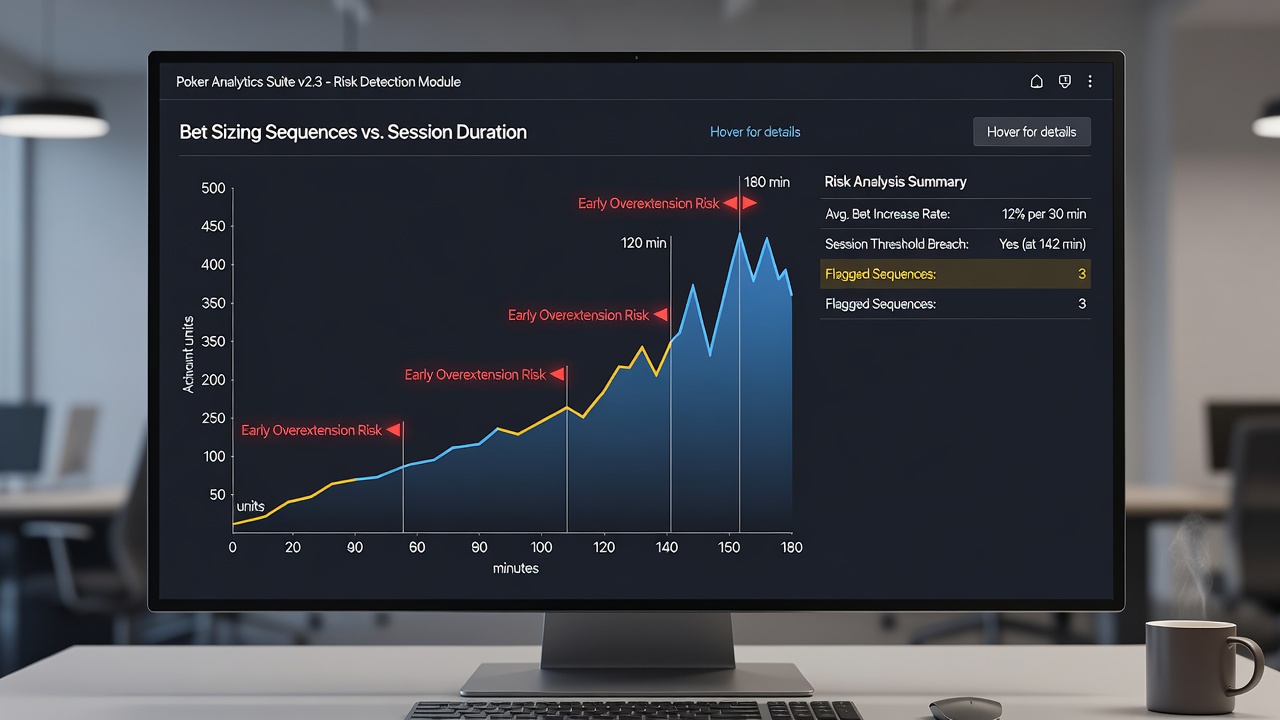
Researchers collect timestamped hand data from virtual cash games to map how bet sizes evolve. In one analysis of ring game logs, average bet-to-pot ratios remained stable in the first hour yet rose steadily between the 120-minute and 180-minute marks. Those patterns appear across multiple tables where players maintain consistent volume, and the data indicates that larger sizing often coincides with longer session durations rather than isolated hand strength. Observers note that this progression happens gradually, allowing software tools to flag deviations before they compound into noticeable performance drops.
Layered formats add complexity because participants switch between tables with different stack sizes and blind levels. Bet sizing sequences in these setups reflect adjustments to varying effective stacks, yet duration markers help isolate whether the changes stem from strategic adaptation or fatigue-related expansion. Studies of online play reveal that players who extend sessions past three hours demonstrate a measurable uptick in overbet frequencies on later streets, independent of board texture.
Session Duration as a Contextual Layer
Duration markers provide the timeline against which bet sizing data gains meaning. Short sessions under 60 minutes typically display tighter ranges and smaller sizing, whereas sessions that stretch into the fourth hour show wider distributions. Software platforms integrate these markers directly into their analytics dashboards, allowing users to cross-reference bet sequences with elapsed time. According to reports from the Australian Gambling Research Centre, prolonged engagement in digital gaming environments correlates with altered risk parameters, a finding that aligns with poker-specific tracking data.
Multi-table configurations magnify the effect because cognitive load increases with each additional table. When session duration exceeds established personal baselines, bet sizing sequences can reveal early overextension through repeated large sizing in marginal spots. Data indicates that these signals emerge before overall win rates decline, offering a window for recalibration of table count or break scheduling.
Flagging Overextension in July 2026 Environments
During July 2026, platform updates introduced more granular session timers that pair directly with bet sizing logs. These tools highlight sequences where bet sizes expand while duration markers pass 150 minutes, a combination that frequently precedes voluntary session termination. Industry data from European online operators shows that players who receive such alerts reduce average table count within the next 30 minutes of play. The integration of these metrics into real-time interfaces allows for proactive monitoring rather than retrospective review.
Analysts compare sequences across different ring game formats to establish baseline norms. In fast-fold variants, bet sizes tend to stay compressed even during longer sessions, while traditional ring games exhibit greater variance once duration markers advance. Cross-referencing these patterns with individual historical data helps isolate overextension signals that apply across multiple virtual environments. A behavioral study published by Canadian researchers documented similar duration-linked changes in decision volume among frequent online participants.
Integration With Broader Tracking Systems
Modern tracking software combines bet sizing sequences and session duration markers with additional variables such as fold frequency and showdown rates. This layered approach produces composite risk scores that update continuously during play. When scores cross predefined thresholds, platforms can surface neutral notifications without interrupting the game flow. Data collected through these systems indicates that early flagging reduces the incidence of extended sessions that end with significant stack reductions.
Operators in regulated markets report that these analytical layers support responsible play features. Session duration markers serve as anchors that prevent bet sizing patterns from being interpreted in isolation, while the combined metrics provide clearer context for multi-table participants. Observers note that the methodology continues to evolve with each software iteration, incorporating larger datasets from 2026 play volumes.
Conclusion
Combining bet sizing sequences with session duration markers creates a practical framework for identifying overextension risks in layered virtual ring game formats. The approach relies on objective data streams that update throughout each session, delivering actionable context before patterns escalate. As platforms refine these tools through 2026 and beyond, players gain access to increasingly precise indicators drawn directly from their own hand histories and timing records.