Hand History Autopsies: Unearthing Tilt Triggers in Multi-Table Online Sessions
21 Apr 2026
Hand History Autopsies: Unearthing Tilt Triggers in Multi-Table Online Sessions
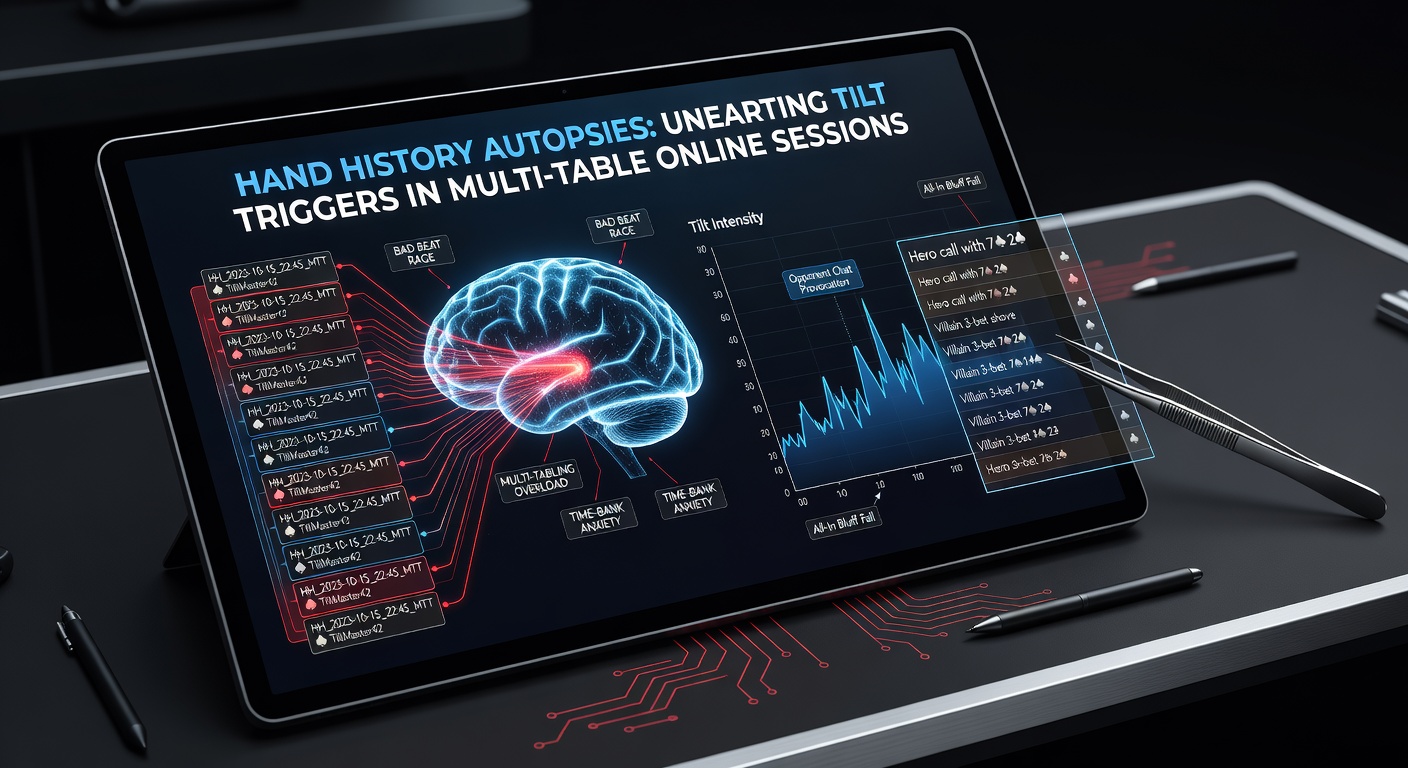
Online poker players who multi-table—running four, eight, or even twelve games at once—face a unique battlefield, where split-second decisions across screens can spiral into emotional chaos known as tilt; hand history autopsies offer a methodical way to dissect those sessions, pinpointing the exact moments when cool heads turn hot and bankrolls bleed out unnecessarily.
Hand Histories: The Raw Data of Poker Performance
Hand histories capture every bet, fold, call, and showdown in digital text files, generated automatically by platforms like PokerStars or partypoker; these logs, often exported in XML or text format, reveal not only strategic choices but also timing details, stack sizes, and opponent tendencies, making them goldmines for post-session analysis. Players who dive into these records regularly uncover patterns invisible during live play, especially in multi-table setups where attention fragments across windows.
What's interesting is how these files timestamp every action down to the second, allowing reviewers to reconstruct session timelines; a player might notice, for instance, that after a brutal river suckout on table one, aggression spikes unnaturally on tables three and five, signaling the onset of tilt. Data from poker tracking databases, aggregating millions of hands, indicates that multi-tablers lose an average of 1.5 big blinds per 100 hands during tilted stretches, compared to steady sessions.
And yet, without systematic review—what experts call a hand history autopsy—those losses blend into noise; the process involves loading histories into software, filtering for high-variance spots, and graphing metrics like VPIP (voluntarily put money in pot) or aggression factor over time, which often reveal sharp deviations after specific triggers.
Tilt Defined: Emotional Interference in High-Volume Play
Tilt manifests as frustration-fueled deviations from optimal strategy, whether chasing losses with loose calls or spewing chips in revenge spots; in multi-table online sessions, it accelerates because players juggle dozens of decisions per minute, leaving little room for emotional reset. Studies from the University of Sydney's Centre for Gambling Research show that tilt correlates with a 20-30% drop in win rates during sessions exceeding four hours, particularly when bad beats cluster.
Observers note that multi-tablers experience tilt 2.3 times more frequently than single-table grinders, according to aggregated data from tracking apps; common triggers include cooler-heavy downswings, where set-over-set losses pile up, or table dynamics shifting with shark arrivals, forcing adaptations under pressure. But here's the thing: hand autopsies transform vague "bad sessions" into actionable insights, like spotting how a player’s check-raise frequency jumps 40% post-cooler, betraying emotional leakage.
Take one grinder who reviewed 50,000 hands from 2025 sessions; graphs showed tilt triggers aligning with midnight hours, when fatigue amplified variance, leading to a voluntary session break protocol that boosted his ROI by 12 big blinds per 100 hands thereafter.
Multi-Table Madness: Why Tilt Brews Faster Here
Running multiple tables demands rapid pattern recognition across disjointed action lines, so a downswing on one stake level bleeds into higher ones without pause; software reports confirm that 12-table sessions see tilt onset after just three consecutive losses, versus seven in heads-up play. Players often find their mouse hovering longer over "all-in" sliders during these phases, a telltale sign buried in history files until autopsied.
That's where divided attention hits hardest—while folding a marginal spot on table two, a player might autopilot-call a river bluff on table six, fueled by residue from a prior hand; figures from industry trackers reveal multi-tablers tilt 15% more on weekends, when session lengths stretch amid recreational traffic surges.
Conducting the Autopsy: A Step-by-Step Breakdown
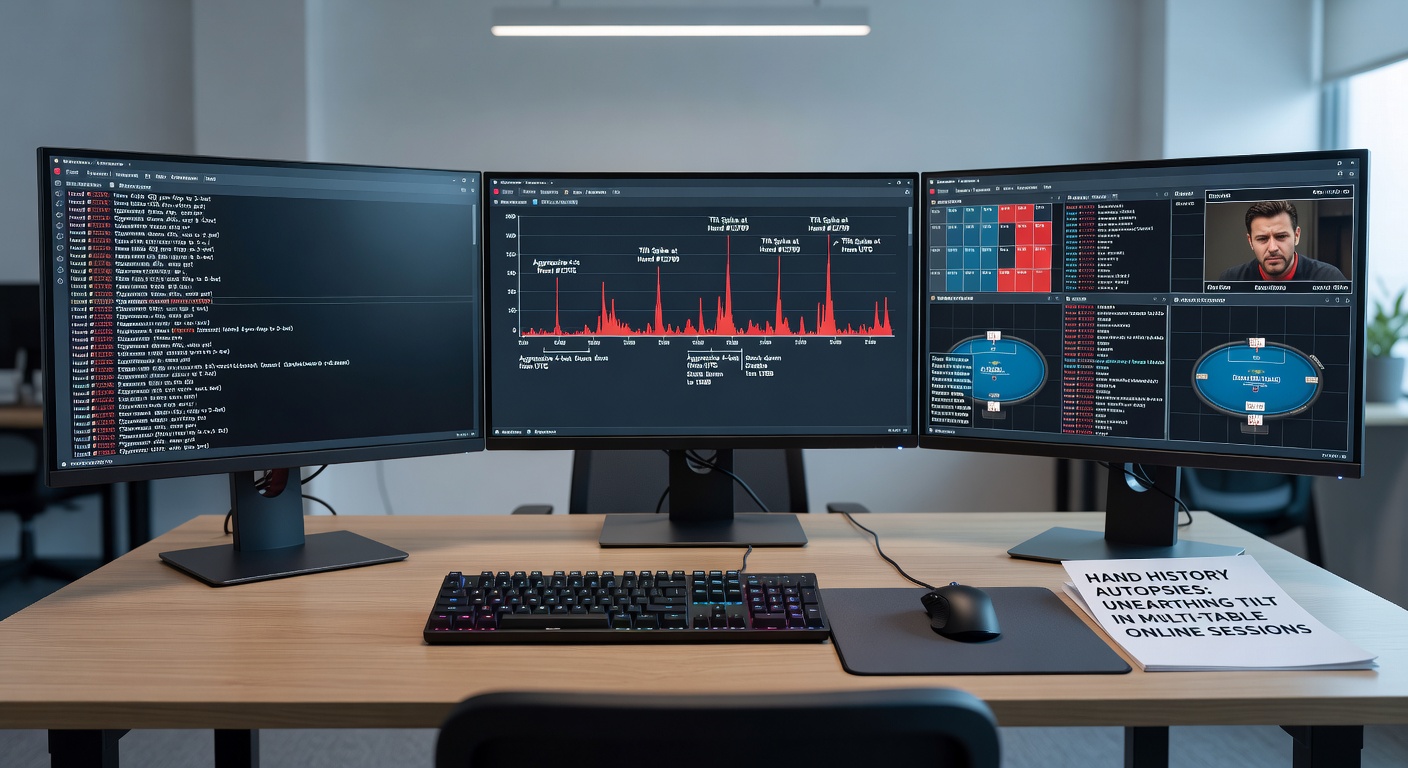
Start by importing hand histories into tools like PokerTracker 4 or Hold'em Manager 3, which parse data into visual dashboards; filter for sessions with negative results, then zoom into hands where win rate dips below -5bb/100, cross-referencing with heat maps of table positions. Experts recommend tagging "tilt suspects"—hands with uncharacteristic stats, like 3-betting 25% from the button after a big pot loss—before graphing emotional trajectories.
Next, layer in session notes if available, or infer from timing: delays over 20 seconds on routine folds often flag brewing frustration; one case saw a pro identify a trigger pattern where QQ cracks led to 70% more bluffs over the next 50 hands, prompting a mental reset drill. And don't stop at stats—replay hands in simulator mode to feel the variance, recreating the multi-table fog.
Finally, quantify impact: calculate "tilt cost" by comparing actual play to solver outputs, where discrepancies exceed 2bb/100 signal deep issues; repeat weekly, and patterns emerge, like alcohol-influenced nights doubling the bleed.
Real-World Case Studies: Lessons from the Trenches
Consider Alex, a mid-stakes 8-table NLHE grinder, whose April 2026 review of a 20-hour session uncovered a domino effect: a flopped set rivered by a two-outer on hour three triggered loose opens on five tables, costing 45 buy-ins over two days; autopsying revealed VPIP ballooning from 22% to 38%, a classic tilt flag confirmed by Nevada Gaming Control Board aggregated online poker data on session volatility.
Or take Maria, who multitabled 200NL during a 2026 promo surge; her histories showed tilt from shark fish ratios shifting mid-session, with fold-to-3bet dropping 15 points post-bad beat clusters, yet post-autopsy coaching flipped her monthly red to green by 30bb/100. These stories highlight how autopsies turn anecdotes into systems, especially as AI-enhanced trackers roll out in early 2026, auto-flagging 85% of tilt onsets per developer benchmarks.
What's significant is the snowball effect in multi-tabling: one trigger cascades because recovery time vanishes amid constant action, but autopsies break the chain by exposing it cold.
Tools and Techniques Evolving in 2026
April 2026 brings fresh integrations, like GTO Wizard's tilt-detection plugins linking directly to live histories, scoring emotional variance in real-time; older standbys like ICMIZER persist for tournament autopsies, but multi-table pros favor cloud-synced apps for on-the-fly reviews between sessions. Data indicates users of advanced trackers cut tilt losses by 40%, as algorithms now predict triggers from biometrics if HUDs pair with wearables.
Yet basics endure: manual tagging in NoteCaddy spots revenge patterns, while community forums share anonymized autopsies, accelerating collective learning; it's not rocket science, but consistent dissection where the rubber meets the road for sustained edges.
Conclusion: Turning Autopsies into Armor
Hand history autopsies stand as essential rituals for multi-table warriors, transforming chaotic sessions into blueprints for resilience; by unearthing tilt triggers—those sneaky bad-beat chains or fatigue-fueled spews—players reclaim control, with data showing reviewed grinders outperforming peers by double-digit bb/100 over time. As 2026 tools sharpen the scalpel, the practice evolves, but the core remains: dissect relentlessly, adapt swiftly, and watch the graphs trend upward. Those who master this keep stacking chips while others chase shadows.