30 Jun 2026
Leveraging Opponent Betting Pattern Databases to Counteract Personal Emotional Responses in Virtual Cash Game Environments
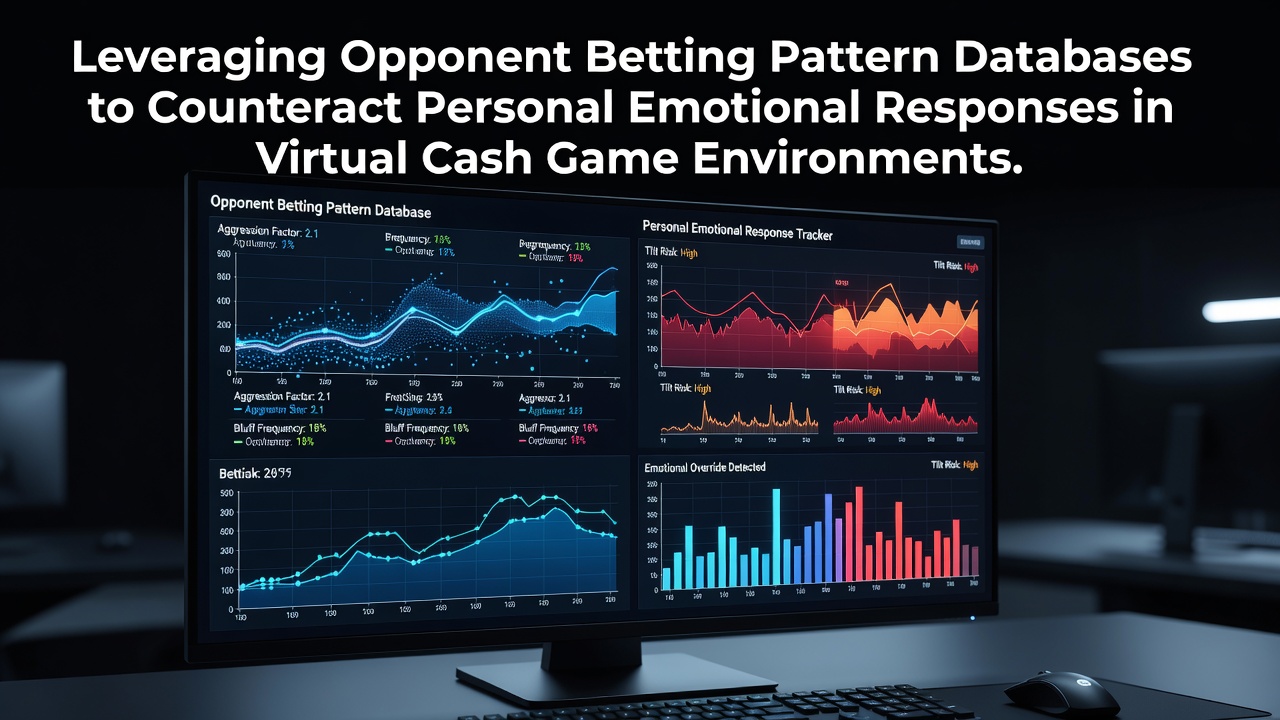
Players in virtual cash game environments encounter rapid sequences of decisions where emotional responses can alter standard strategy execution, yet opponent betting pattern databases provide structured data that isolates observable actions from subjective reactions. These systems compile historical betting frequencies, sizing tendencies, and positional adjustments across thousands of hands, allowing users to reference aggregated statistics rather than relying solely on immediate emotional cues during active play.
Database Construction and Pattern Recognition
Software tools aggregate hand histories from multiple sessions into searchable repositories that track variables such as continuation bet frequency on different board textures, check-raise rates in specific stack depth scenarios, and fold percentages to three-bet sizes. Observers note that these records update in real time as new data streams in from ongoing games, creating profiles that reflect actual opponent behavior across varying session lengths and times of day. Researchers discovered that patterns become statistically significant after approximately 500 hands per opponent, at which point deviations from baseline ranges appear more clearly in the logs.
Integration with Emotional Regulation Protocols
Access to pre-session opponent profiles enables players to predefine response thresholds based on data points instead of reacting to each pot outcome in isolation. For instance, when facing an unexpected large bet from a profile known for 8% overbet frequency on rivers, users can execute predefined calling ranges that account for the documented range rather than momentary frustration or fear of variance. Studies from behavioral research groups indicate that such preloaded decision frameworks reduce instances of deviation from established strategies during high-pressure moments in online ring games.
Application in Multi-Table Cash Game Settings
In environments where participants run 4 to 12 tables simultaneously, databases flag opponents who exhibit exploitable tendencies such as delayed continuation bets or polarized river leads, supplying reference material that remains visible alongside active tables. This setup allows adjustments to proceed through menu selections or hotkey commands while the underlying data anchors choices against emotional escalation. Data from industry reports compiled in early 2026 shows increased adoption of these tools among players managing larger table volumes, correlating with extended session durations before voluntary breaks occur.
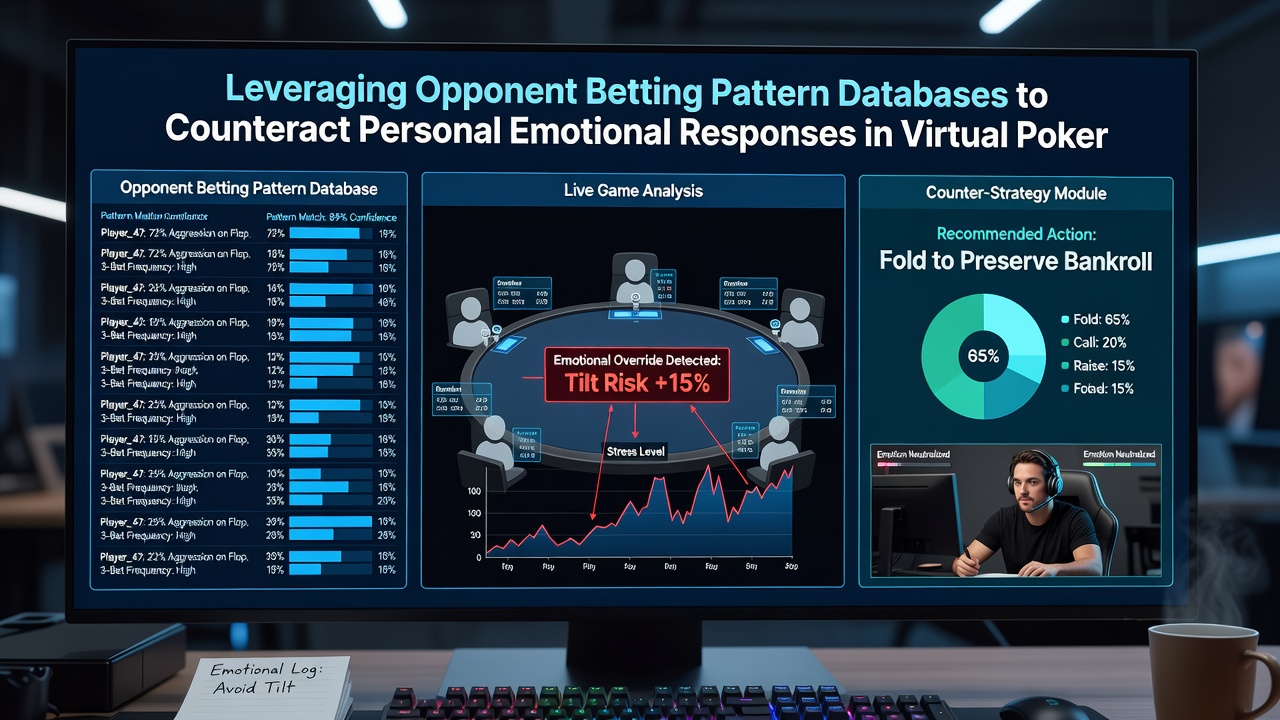
One documented approach involves overlaying database alerts directly onto table interfaces, highlighting opponents whose current actions diverge from historical norms. Such visual cues prompt verification against recorded statistics before committing chips, creating an external checkpoint that interrupts automatic emotional processing. Australian research institutions examining online gaming behaviors have reported similar mechanisms in broader digital gambling studies, noting measurable shifts in decision consistency when external data references remain active throughout sessions.
Technical Implementation and Data Sources
Modern platforms export hand histories in standardized formats compatible with third-party analysis programs that generate heat maps, frequency charts, and range breakdowns for quick reference. These programs import data from multiple poker sites while maintaining separate profiles per screen name, enabling cross-site pattern comparison when opponents migrate between networks. Figures released by the Nevada Gaming Control Board in mid-2026 reflect sustained growth in licensed online poker traffic, underscoring the expanding volume of hand data available for such analytical systems.
Users configure filters to isolate relevant subsets, such as actions taken within the first 30 minutes of sessions or during specific time blocks when emotional fatigue tends to accumulate. This filtering process refines the database output into actionable segments that players consult during brief pauses between hands, maintaining focus on documented tendencies instead of internal state fluctuations.
Observed Outcomes Across Player Cohorts
Longitudinal tracking conducted by independent gaming research organizations reveals that participants who maintain active database usage demonstrate narrower variance in bet sizing during identified tilt windows compared to control groups without such tools. The records also capture instances where players override initial impulses after cross-referencing opponent notes, resulting in preserved stack depths across extended virtual sessions. European gaming associations have compiled comparable datasets showing correlations between structured data access and reduced frequency of post-session reviews highlighting emotional decision errors.
Conclusion
Opponent betting pattern databases function as external reference systems that supply verifiable historical context during live cash game play, thereby supporting adherence to established strategies amid emotional fluctuations. Continued refinement of these tools through expanded data inputs and interface integrations sustains their utility as virtual environments evolve through 2026 and beyond.