Mapping Keyboard Pressure Variations to Emotional State Transitions Throughout Multi-Hour Online Sessions
Erik Baumann · Jun 2, 2026
Mapping Keyboard Pressure Variations to Emotional State Transitions Throughout Multi-Hour Online Sessions
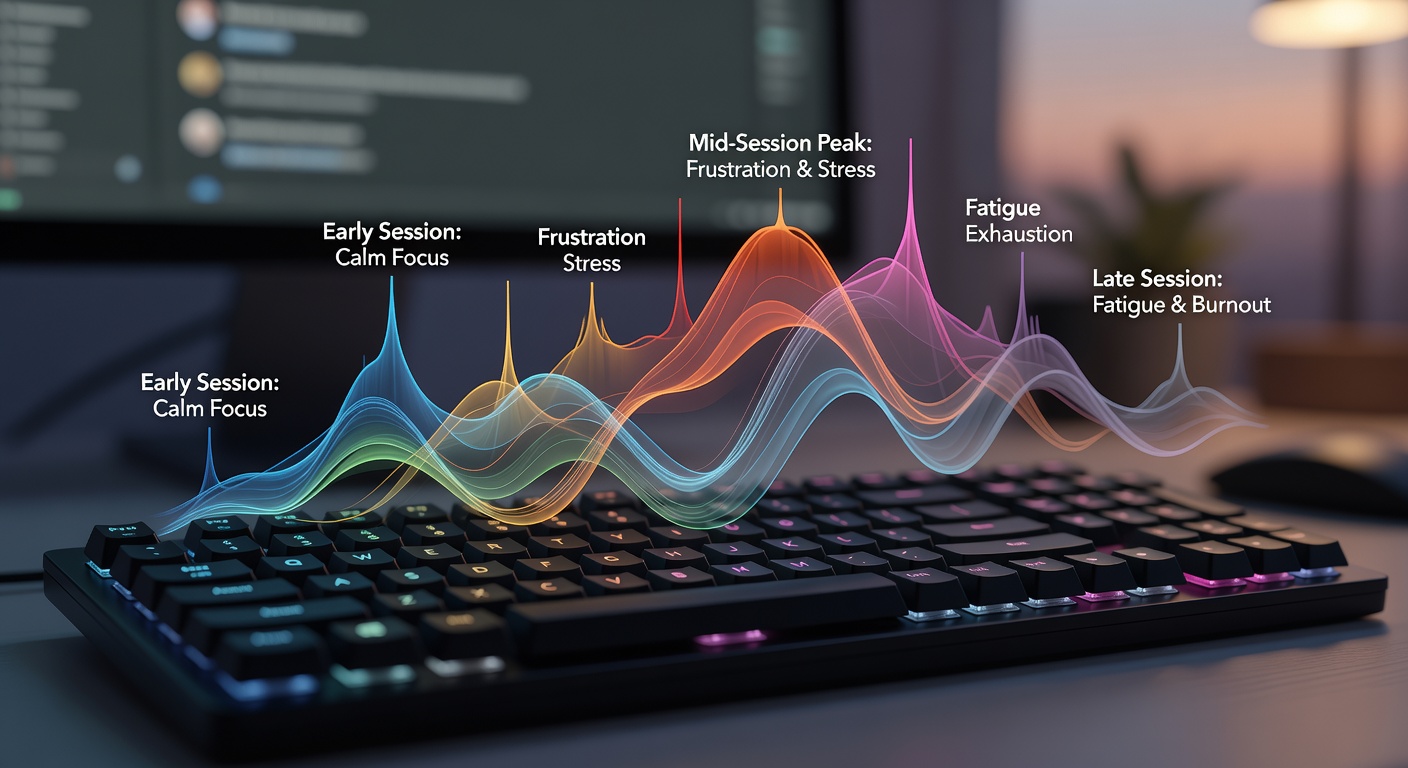
Researchers in human-computer interaction have examined how variations in keystroke force correlate with shifts in user emotional states during prolonged online activities. Data from multiple studies indicate that pressure applied to keys tends to increase during periods of heightened arousal while decreasing in phases of fatigue or disengagement. These patterns emerge consistently across sessions lasting several hours, where timestamped logs align force metrics with action sequences in gaming and productivity environments. Equipment setups often incorporate pressure-sensitive keyboards or retrofitted sensors that record newton-level force outputs at millisecond intervals. Software platforms then process these inputs alongside behavioral logs such as click rates and response latencies. In June 2026, presentations at international computing conferences highlighted expanded datasets collected from participants across North America and Europe, showing measurable transitions between baseline calm states and elevated tension markers after the two-hour mark in continuous sessions.Measurement Techniques and Data Collection
Engineers design pressure-mapping systems to capture subtle differences in key depression without disrupting normal typing or input flows. Calibration routines establish individual baselines for each user, accounting for factors like hand size and habitual force levels. Once calibrated, the systems track deviations that researchers associate with emotional transitions, including frustration spikes or sustained focus periods.
Longitudinal records from controlled environments reveal that pressure variance rises sharply following unexpected outcomes in interactive tasks, then gradually normalizes if users implement brief pauses. Observers note that sessions extending beyond four hours frequently display oscillatory patterns where force metrics fluctuate in tandem with decision density, creating traceable signatures of emotional movement through states of engagement, irritation, and recovery.
Integration with Session Analytics
Platforms that combine pressure data with standard activity logs provide granular views of how emotional states evolve in real time. Analysts map these variations onto timelines of user actions, identifying clusters where elevated pressure precedes clusters of rapid or repetitive inputs. Such alignments allow for retrospective examination of how emotional transitions influence performance consistency across multi-hour stretches.
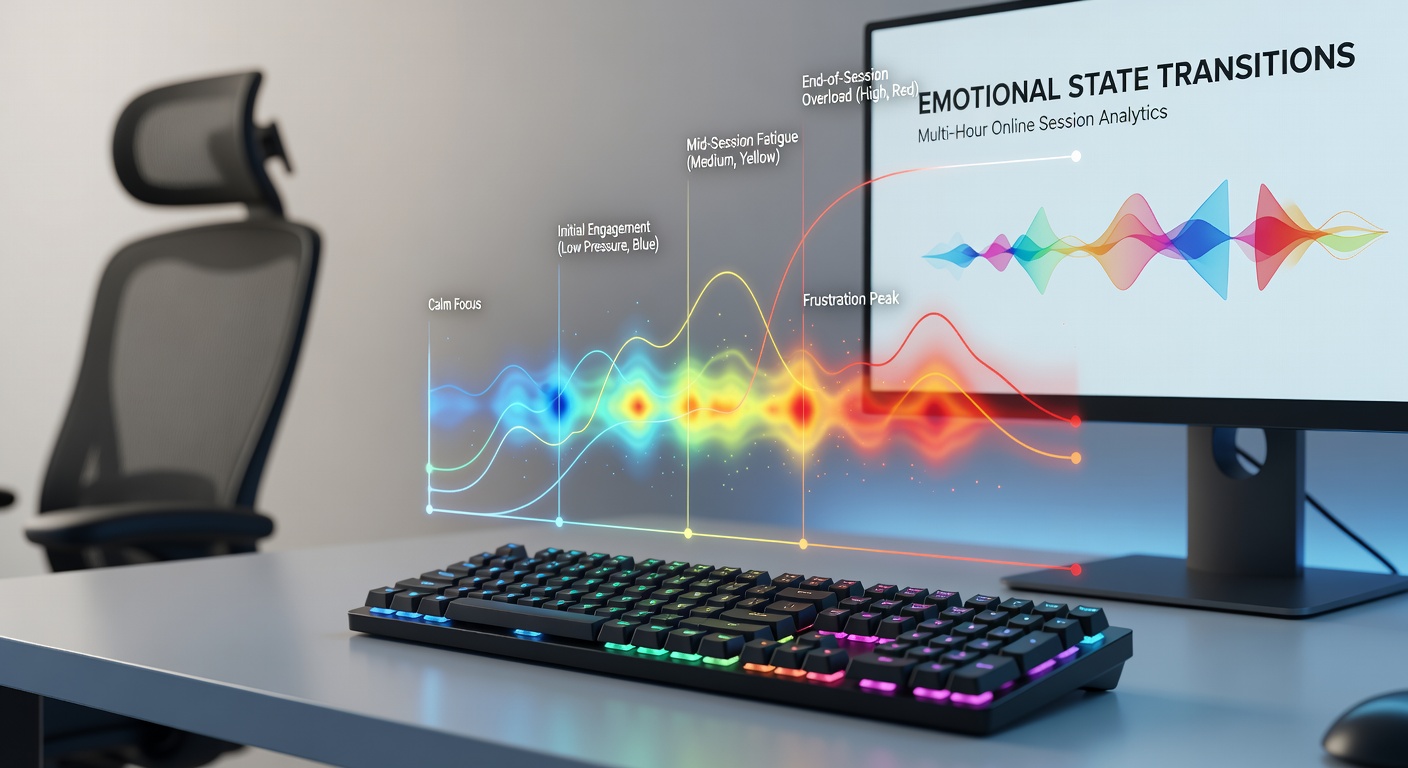
Studies conducted by teams at institutions including the University of Toronto have quantified these relationships using statistical models that treat pressure readings as continuous variables. Their findings, available through academic repositories, demonstrate that transitions toward negative emotional states often register as sustained increases in average force coupled with greater standard deviation across individual keystrokes. These models draw from datasets gathered in both laboratory and naturalistic settings, providing cross-validation for the observed patterns.
Applications in Extended Digital Environments
Developers incorporate pressure-mapping outputs into adaptive interfaces that adjust difficulty or suggest breaks when specific thresholds are crossed. In gaming contexts, these systems flag sequences where force escalation coincides with accelerated decision rates, enabling external monitoring tools to prompt users toward recalibration protocols. Regulatory bodies in regions such as Australia have referenced similar sensor-based approaches when evaluating responsible design guidelines for interactive software products.
One documented implementation involved university participants completing repeated problem-solving tasks over five-hour periods. Pressure data revealed distinct phases: an initial stable period, followed by mid-session elevation linked to accumulating cognitive load, and eventual decline associated with performance plateaus. The research team cross-referenced these phases with self-reported mood inventories collected at thirty-minute intervals, confirming alignment between objective force metrics and subjective state reports.
Challenges in Interpretation and Scaling
Individual differences in baseline pressure application introduce variability that requires extensive per-user normalization before group-level inferences become reliable. Environmental factors such as keyboard model, hand positioning, and ambient temperature also influence readings, necessitating controlled conditions during data collection. Researchers address these issues through multi-factor regression models that isolate emotional contributions from extraneous variables.
Scaling pressure-mapping systems to widespread consumer use demands lightweight sensor integration and privacy-preserving data handling. Industry reports from organizations like the Entertainment Software Association indicate growing interest in affective feedback mechanisms, yet emphasize the need for transparent consent frameworks when logging biometric-style inputs during recreational sessions.
Conclusion
Pressure variation analysis offers a non-intrusive channel for tracking emotional state transitions across extended online sessions. Continued refinement of sensor accuracy and analytical models supports broader application in fields ranging from performance optimization to user well-being monitoring. As datasets expand through collaborative research efforts, the precision of these mappings continues to improve, yielding actionable insights derived directly from observable input behaviors.