23 May 2026
The Hidden Cadence of Virtual Sessions: Mapping Decision Sequences to Uncover Emotional Shifts in Prolonged Online Play
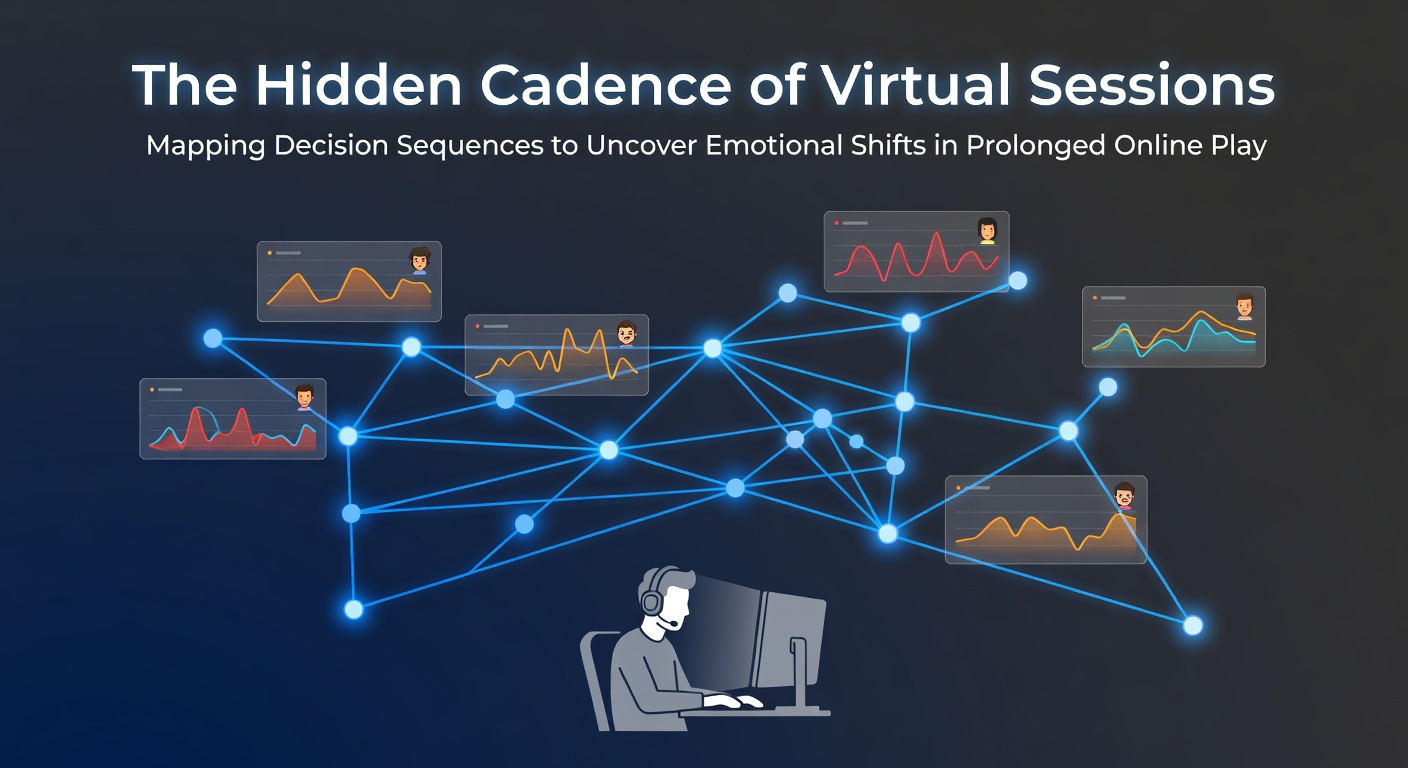
Researchers in behavioral psychology have turned their attention to prolonged online sessions where participants make repeated choices under time pressure, and these investigations reveal patterns that link sequences of decisions to measurable changes in emotional states. Data from multiple studies show that players who engage in extended virtual environments exhibit detectable shifts in risk assessment and response timing, patterns that emerge through careful tracking of action logs rather than self-reported feelings.
Defining Decision Sequences in Online Contexts
Decision sequences consist of chained choices recorded during virtual play, including bet sizing, fold rates, and timing intervals between actions, while analysts examine how these elements evolve across hours of continuous engagement. Studies conducted at institutions such as the University of Sydney demonstrate that early sequences often display consistent calibration, yet later segments reveal deviations in aggression levels and hesitation markers that correlate with documented emotional fluctuations. Observers note that software tools now capture these sequences at millisecond precision, allowing researchers to align them with physiological data collected through wearable sensors in controlled trials.
Methods for Mapping Emotional Indicators
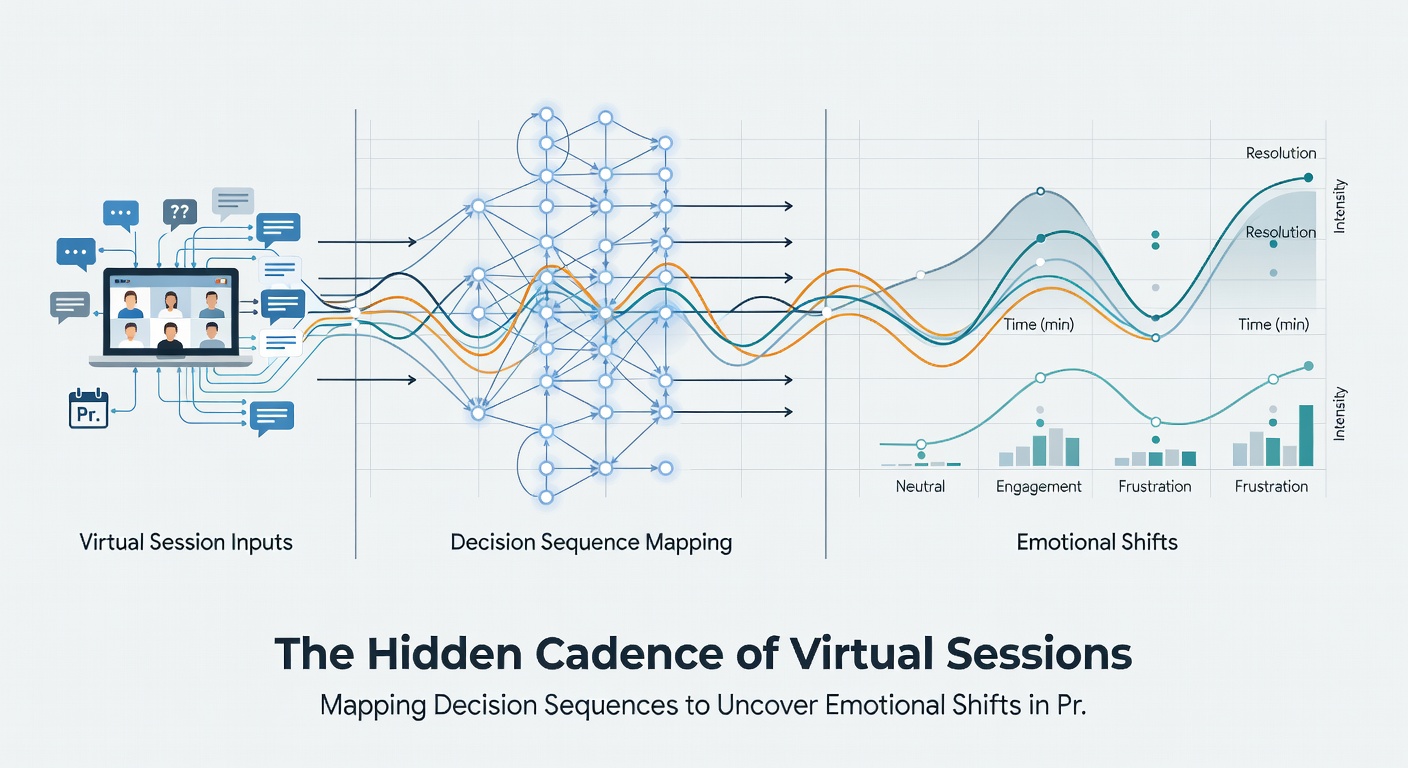
Mapping techniques rely on algorithmic parsing of timestamped actions combined with machine learning models trained on labeled datasets from prior experiments, and these models identify clusters where decision velocity increases alongside reduced variance in outcome evaluation. According to findings published through the National Institutes of Health, prolonged sessions exceeding four hours produce measurable increases in impulsive selections that align with elevated cortisol readings in participants monitored during laboratory simulations. Analysts apply sequence alignment algorithms similar to those used in bioinformatics, treating each decision as a node connected by temporal and contextual edges that highlight transition points where emotional drift becomes statistically significant.
One research team at McGill University tracked participants across multiple sessions in 2025 and reported that sequences marked by rapid successive calls followed by sudden pauses often preceded self-reported frustration in post-session debriefs, though the team emphasized correlation rather than direct causation. Equipment from companies specializing in gaming analytics now integrates these mapping functions directly into platform dashboards, providing session summaries that flag potential emotional transition zones without requiring manual review of every hand or round.
Patterns Observed in Extended Play Periods
Longer sessions produce characteristic arcs where initial caution gives way to accelerated decision cycles around the three-hour mark, and these cycles frequently coincide with narrowed attention to pot odds or expected value calculations. Data collected by the Australian Institute of Health and Welfare in collaboration with gaming platforms indicates that players who maintain stable sequence patterns across five-hour stretches show lower rates of post-session mood disturbance compared with those whose sequences fragment into erratic clusters. The same reports note that geographic differences appear in baseline timing, with participants from regions with stricter session time regulations displaying slower average decision velocities from the outset.
Software developers released updated sequence-mapping modules in May 2026 that incorporate real-time feedback loops, allowing platforms to surface pattern alerts to users who opt into the feature while preserving anonymity of individual data streams. These updates draw on aggregated datasets exceeding 2.3 million sessions, according to documentation released alongside the software, and they emphasize detection of shifts rather than intervention. European research consortia have begun cross-referencing these outputs with EEG recordings to refine the accuracy of emotional state predictions derived solely from behavioral logs.
Applications Across Gaming Formats
Formats ranging from competitive card environments to open-world multiplayer scenarios share core sequence elements that researchers isolate for comparison, and cross-format studies reveal that emotional shift signatures remain consistent despite differences in rule complexity. Teams at the University of Toronto examined cash-style sessions alongside tournament structures and found parallel increases in deviation from optimal lines after sustained play, patterns that hold across skill brackets when normalized for experience level. Industry groups such as the International Gaming Standards Association have issued guidelines encouraging transparent reporting of sequence metrics in player protection reports, aiming to standardize how platforms document these behavioral indicators.
Training programs for support staff now include modules on interpreting sequence maps, teaching recognition of transition markers without direct access to personal health information. Government agencies in Canada and Australia have referenced these approaches in policy discussions around digital platform responsibilities, highlighting the value of objective behavioral data in identifying users who might benefit from voluntary session limits.
Conclusion
Sequence mapping continues to evolve as a method for surfacing emotional dynamics within virtual play, supported by expanding datasets and refined analytical tools that connect action patterns to measurable state changes. Research institutions across multiple continents maintain active projects examining these relationships, and platform implementations in 2026 reflect growing integration of such analytics into standard session reporting. The approach yields objective indicators that complement rather than replace traditional measures of player experience, providing a structured lens for understanding how prolonged engagement alters decision frameworks over time.