18 Jun 2026
Tracking Eye Blink Rates to Detect Early Signs of Decision Fatigue in Multi-Table Online Poker Environments
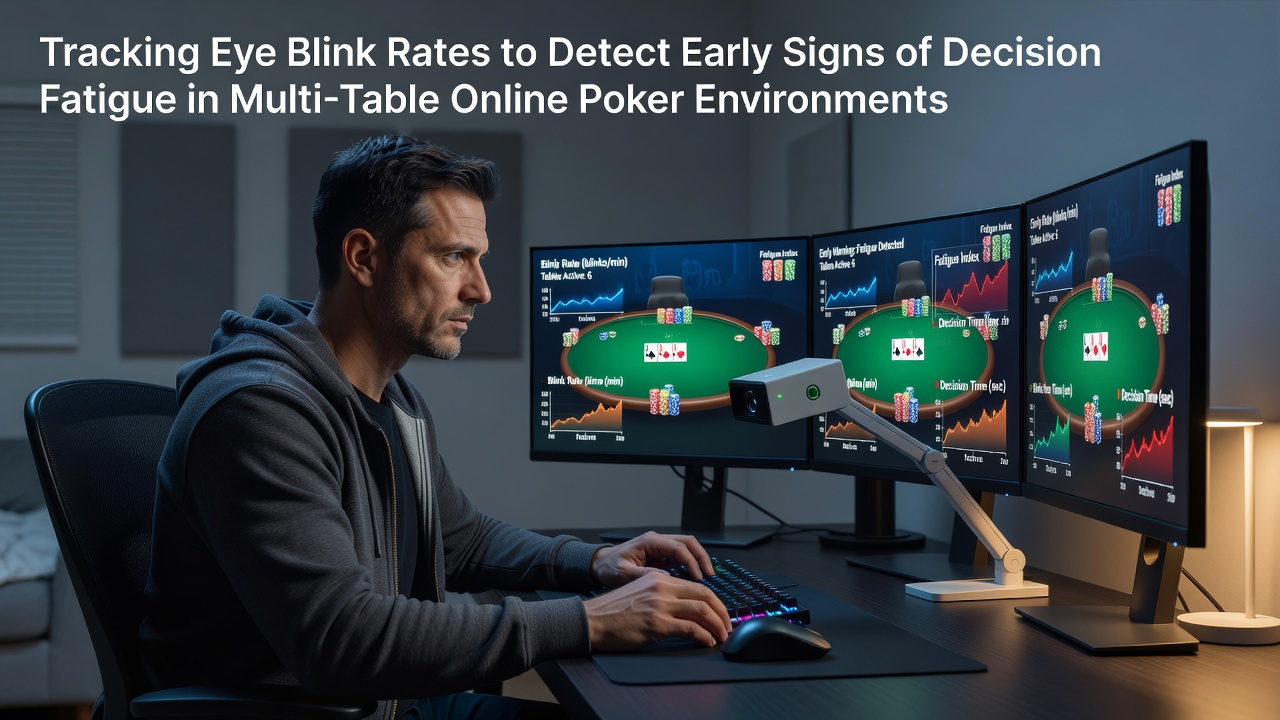
Multi-table online poker sessions place sustained demands on cognitive resources and researchers have examined eye blink rates as one measurable indicator of emerging decision fatigue. Studies in cognitive neuroscience link spontaneous blink frequency to dopamine activity and mental workload, with rates rising as fatigue sets in during prolonged tasks. In poker environments where players manage several tables simultaneously, these physiological signals can appear earlier than self-reported tiredness or performance drops visible in hand histories.
Physiological Basis for Blink Rate Monitoring
Eye blink rate serves as a non-invasive proxy because baseline rates average 15 to 20 blinks per minute in rested adults, yet increase under conditions of accumulating cognitive load. Researchers at institutions such as the University of Toronto have documented how elevated blink frequency correlates with reduced prefrontal cortex efficiency during decision sequences that require continuous evaluation of probabilities and risk. When applied to online poker, software can capture webcam footage and calculate blink intervals without interrupting play, producing timestamped data that aligns with action logs from multiple tables.
Equipment setups typically involve standard webcams operating at 30 frames per second alongside open-source computer vision libraries that detect eyelid closure duration. Thresholds for fatigue alerts often trigger when blink intervals shorten below 2.5 seconds for sustained periods, a pattern observers note appears consistently in laboratory simulations of multi-table scenarios lasting beyond four hours.
Integration with Existing Poker Analytics Platforms
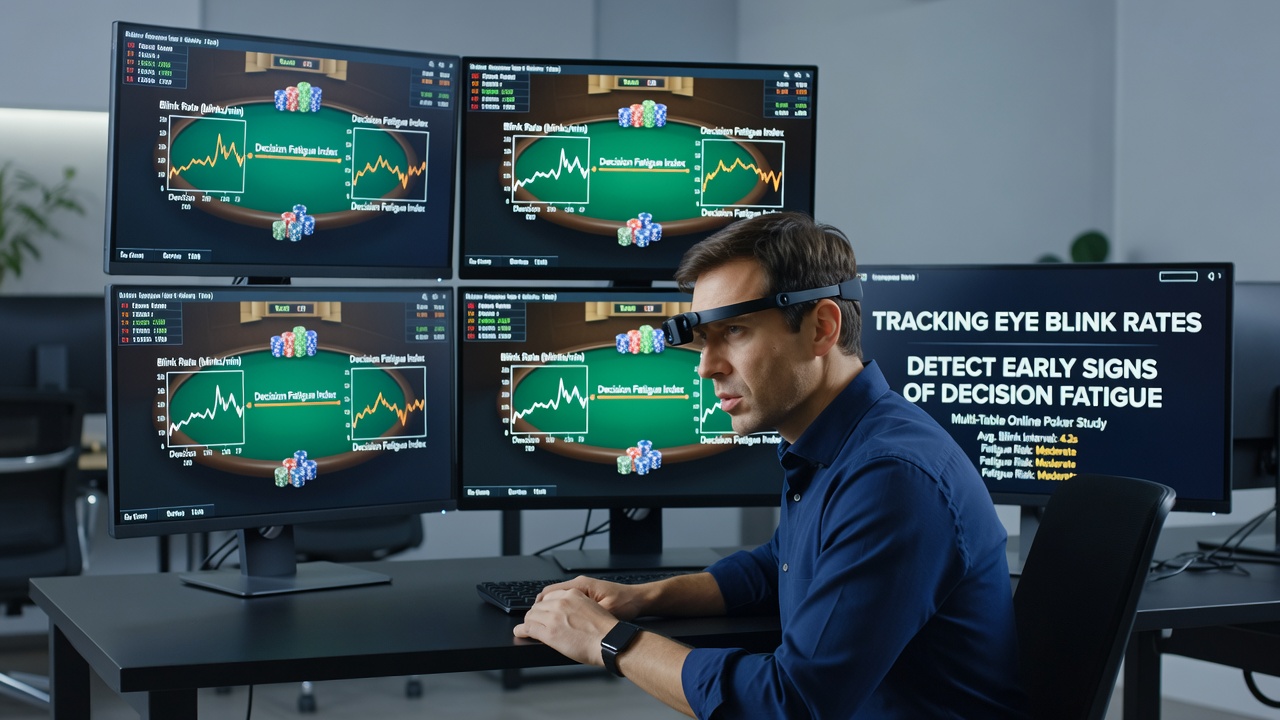
Commercial tracking tools have begun incorporating eye data streams alongside established metrics such as VPIP and aggression frequency. Developers integrate these signals through API connections that overlay blink rate trends on existing heads-up display panels. In June 2026 several platforms expanded beta features allowing players to review session footage synchronized with both hand outcomes and physiological markers, creating a layered record that reveals when decision quality begins to diverge from earlier patterns.
One study conducted across Canadian online poker communities collected data from 87 participants during scheduled cash game grinds. Results indicated that blink rate spikes preceded measurable declines in fold equity realization by an average of 14 minutes, providing a potential early-warning window before standard statistical indicators reflected the shift.
Data Collection Protocols and Privacy Considerations
Implementation requires explicit user consent because video processing occurs locally or through encrypted cloud services. Regulatory frameworks in the European Union under the Digital Services Act and in Australia through the Office of the Australian Information Commissioner set standards for biometric data handling in entertainment applications. Platforms must store blink metrics separately from personally identifiable information and provide users with deletion options after each session.
Calibration routines establish individual baselines during the first 30 minutes of play, accounting for natural variations caused by screen brightness, caffeine intake, and ambient lighting. Once calibrated, algorithms flag deviations exceeding two standard deviations from the player's established mean, generating optional notifications that appear as subtle screen overlays rather than disruptive pop-ups.
Comparative Research Across Gaming Formats
Investigators have compared blink dynamics in tournament versus cash game settings and found that multi-table cash sessions produce steadier workload accumulation because blind levels remain constant. Tournament structures introduce variable pressure that can mask fatigue signals until late stages. Data from the National Institutes of Health repository shows that players averaging eight or more tables simultaneously exhibit blink rate increases 22 percent higher than those managing four tables under identical time constraints.
Additional findings from Australian university labs indicate that experienced players develop compensatory strategies such as periodic screen gaze shifts that temporarily stabilize blink patterns, yet these adaptations diminish after six consecutive hours of play. The evidence suggests training programs could incorporate blink awareness modules to extend effective session length without external monitoring.
Future Applications in Training and Recovery
Coaching services have started offering post-session reviews that combine eye data with traditional strategy analysis. These reviews highlight specific decision points where blink acceleration coincided with deviation from pre-session game plans. Because the technology remains supplementary rather than prescriptive, players retain full control over whether to adjust table counts or schedule breaks based on the generated reports.
Conclusion
Eye blink rate tracking adds a physiological dimension to existing methods for monitoring decision fatigue in multi-table online poker. Continued refinement of detection algorithms alongside established privacy standards supports broader adoption while researchers gather longitudinal datasets that clarify how individual differences influence signal reliability across diverse player populations.